
How Bench Warrants Work in Brown County
A Brown County bench warrant is arrest process that comes straight from the bench, inside a civil or criminal case already open in a Brown County court. That is the term Indiana court materials use. Missed hearings, contempt, and disobeyed orders all trigger it. Even so, Brown County records do not support calling every such order a capias or capias pro fine. The judge's own words in the file control. What the order does is straightforward: it lets law enforcement arrest the person so the pending matter returns to court. An old failure-to-appear entry proves nothing about today. Age alone does not clear a Brown County warrant either. The chronology may show issue, service, return, recall, or quash events. Current status still calls for the Brown County Clerk, Brown Circuit Court, or the Brown County Sheriff to confirm it. That one conversation settles what a docket alone cannot.
Brown County Bench Warrant Route
Brown County runs a compact court map. The current Indiana directory lists Brown Circuit Court, Judicial District 21, as Brown County's trial court. Brown County has no separate superior, county, justice, or municipal court listed. The Brown County Clerk keeps that court's file. One door, in effect. A Brown County bench warrant lookup gets simpler, though the jobs of judge, clerk, and sheriff still stay separate.
Brown Circuit Court
20 E Main Street, second floor, Nashville, IN 47448
812-988-7557
The court controls hearings and judicial recall or quash orders.
Brown County Clerk
20 E Main Street, Nashville, IN 47448
812-988-5510
The Clerk keeps the case file and explains its public docket.
Brown County Sheriff
55 State Road 46 E, Nashville, IN 47448
812-988-6655
The Sheriff confirms service matters and current surrender directions.
Bench Warrant Issuance in Brown County
A Brown County judge signs a bench warrant when someone fails to meet a required court duty. Brown Circuit Court then enters the order in the case record. If that record is public, the event may surface in Indiana MyCase. MyCase is a case system, not a live warrant register. It has no documented warrant-only filter. Events can lag behind service or omit restricted material. Issuance and service are separate steps. The court creates the order, the Brown County Clerk dockets it, and the Sheriff enforces it. A Brown County bench warrant stays active until service or until the court enters an order recalling or quashing it. Recall means the court withdraws the warrant. Quash means the court sets it aside. Neither result can be assumed from a paid balance, a closed screen, or a phone call without a matching docket entry or written order.
MyCase Tracks Brown County FTA Events
MyCase can pull the Brown Circuit Court file. The Case tab takes a case number, citation number, or cross-reference number, while the Name tab runs on a last name or business name. Pick Brown Circuit Court when the dynamic list offers it. Its Odyssey code is 07C01. A first name, middle name, or date of birth can narrow the match further. Read the header, the status, and the dated events in the Brown County chronology rather than stopping at the first match. The official MyCase tips explain trailing wildcards, sounds-like searching, date filters, and the 1,000-result cap. CAPTCHA blocks bulk use. A blank result can reflect a spelling issue, a new filing, a different venue, or an access limit. It cannot rule out a Brown County bench warrant.
| Field | Best use | Limit |
|---|---|---|
| Case or citation number | Direct route to one case | Use the full number on the notice |
| Name | Find eligible public files | Never publish private birth data |
| Court | Narrow to Brown Circuit Court | The choice loads dynamically |
| Status and dates | Review open and closed cases | Case status is not warrant status |
How Bench and Arrest Warrants Differ
Both orders end in custody. They just start differently. A Brown County bench warrant grows from a case already open, usually after a missed duty like failure to appear. An arrest warrant more often follows an indictment or a judge's probable-cause finding on an information, and the signed order plus the current docket govern either way. That distinction shapes the questions to ask.
| Feature | Bench warrant | Arrest warrant |
|---|---|---|
| Usual trigger | Missed hearing or order violation | Charge and probable cause |
| Case setting | Existing court duty | Charging process |
| Key record | FTA event and court order | Written warrant and charge |
| Next step | Ask about recall or appearance | Plan service, bond, and hearing |
The Brown County arrest warrant lookup addresses the probable-cause instrument in more depth.
Brown County Bench Warrant Terms
Docket shorthand can hide real differences. Brown County sources support "bench warrant" and "warrant for arrest after failure to appear," not a local public capias list. Ask the Clerk what each event means.
- Failure to appear
- The person did not attend when ordered. The court may issue a warrant or another order.
- Served
- Law enforcement carried out the warrant. Service does not end the underlying case.
- Recalled
- The issuing court withdrew its warrant through judicial action.
- Quashed
- The court set the warrant aside by order.
- Returned
- Process came back to court, which alone does not show the final current result.
"Closed" is a case status, not a guaranteed recall. A payment receipt proves only a transaction, never the order that resolves a Brown County bench warrant.
Clearing a Bench Warrant in Brown County
Start with verified facts and a safe plan. No Brown County source promises a walk-in recall docket, same-day release, or a no-arrest status call. The Clerk can identify public file facts. Only a judge can grant relief. Counsel can weigh whether a motion to recall or quash, a scheduled appearance, or another filing fits the case.
- Gather the notice, full cause number, court name, and hearing date.
- Review MyCase, then call the Brown County Clerk for the current public docket entry.
- Ask counsel or the court about a motion, reset, or scheduled appearance.
- Call the Sheriff before appearing if arrest is possible, and follow current surrender directions.
- After action, obtain an order, docket update, receipt, or release paper that shows the result.
Caution: Do not ignore a Brown County bench warrant or assume an old case, fine payment, or silent search result cleared it.
Brown County Bond Follows Service
Money moves second in Brown County. The county's official payment page draws the line plainly: a bond payment on an arrest warrant is not accepted until the court has served that warrant. Cash bonds go to the Clerk's Office. Weekday courthouse hours apply. After hours, the Sheriff's Department takes them by cash or credit card. Neither route promises release. The local bond rule is dated July 1, 2014, so verify it still governs. Initial bond runs surety or ten percent cash unless a judge or magistrate orders otherwise. No-bond and delayed-bond cases are listed too. A $5 death-benefit fee rides on every payment. Before paying, confirm the current order, the total, the accepted payer, and the method.
Brown County Bench Warrant Access Limits
Indiana sets two doors for records. Court files answer to the Rules on Access to Court Records, while agency records answer to the Indiana Access to Public Records Act. Most court records are open. A rule can still shut some. Juvenile, sealed, expunged, confidential, investigative, and private data may be withheld or redacted. Indiana Rule 5 spells out the exclusions that can shape a Brown County bench warrant search.
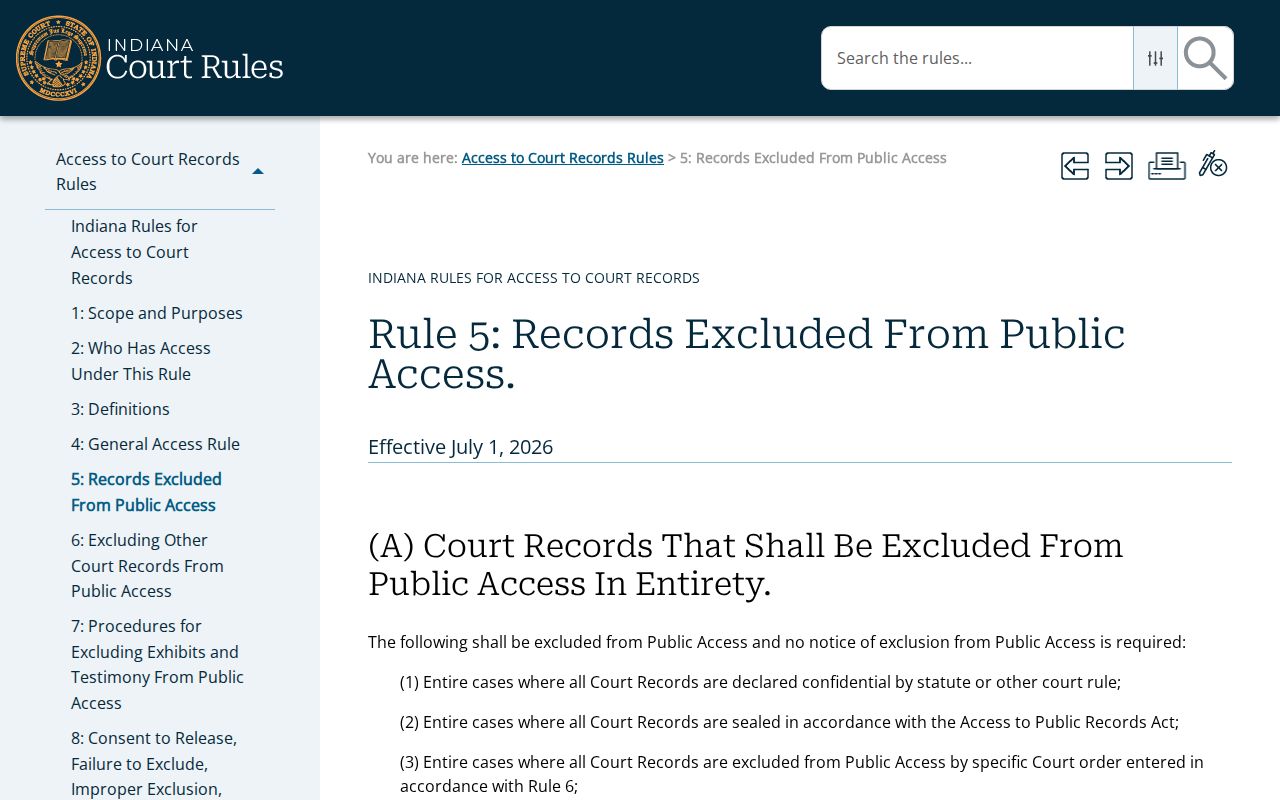
Empty results prove nothing. Brown County's online silence cannot be treated as proof that no warrant or order exists. The Sheriff's Useful Links and Forms page offers a general records request, but the form has no warrant checkbox. It is a fallback for an existing nonconfidential agency record, not a recall motion or an urgent status tool.
Brown County Courts That Issue Bench Warrants
Brown Circuit Court is the trial-court route. It is the verified source for Brown County bench warrants, the court that can recall or quash one. Court Services handles probation, pretrial services, and community corrections. It is not the recall judge, and it is not a warrant database. Supervision problems may need that call too. Use it in addition to the court, never instead of it. Nashville complicates the map. It posts ordinance and traffic payment material alongside historical Town Court language, but the current directory lists no separate Nashville court. For a town notice, call Town Hall at 812-988-5526 or Nashville Police at 812-988-0341. Then ask the Brown County Clerk where the case is filed. The Nashville Police page gives the local contact for that venue check. Brown County's rule of thumb: fix the venue first, then seek recall only from the court that owns the order.